Deutsch
 English
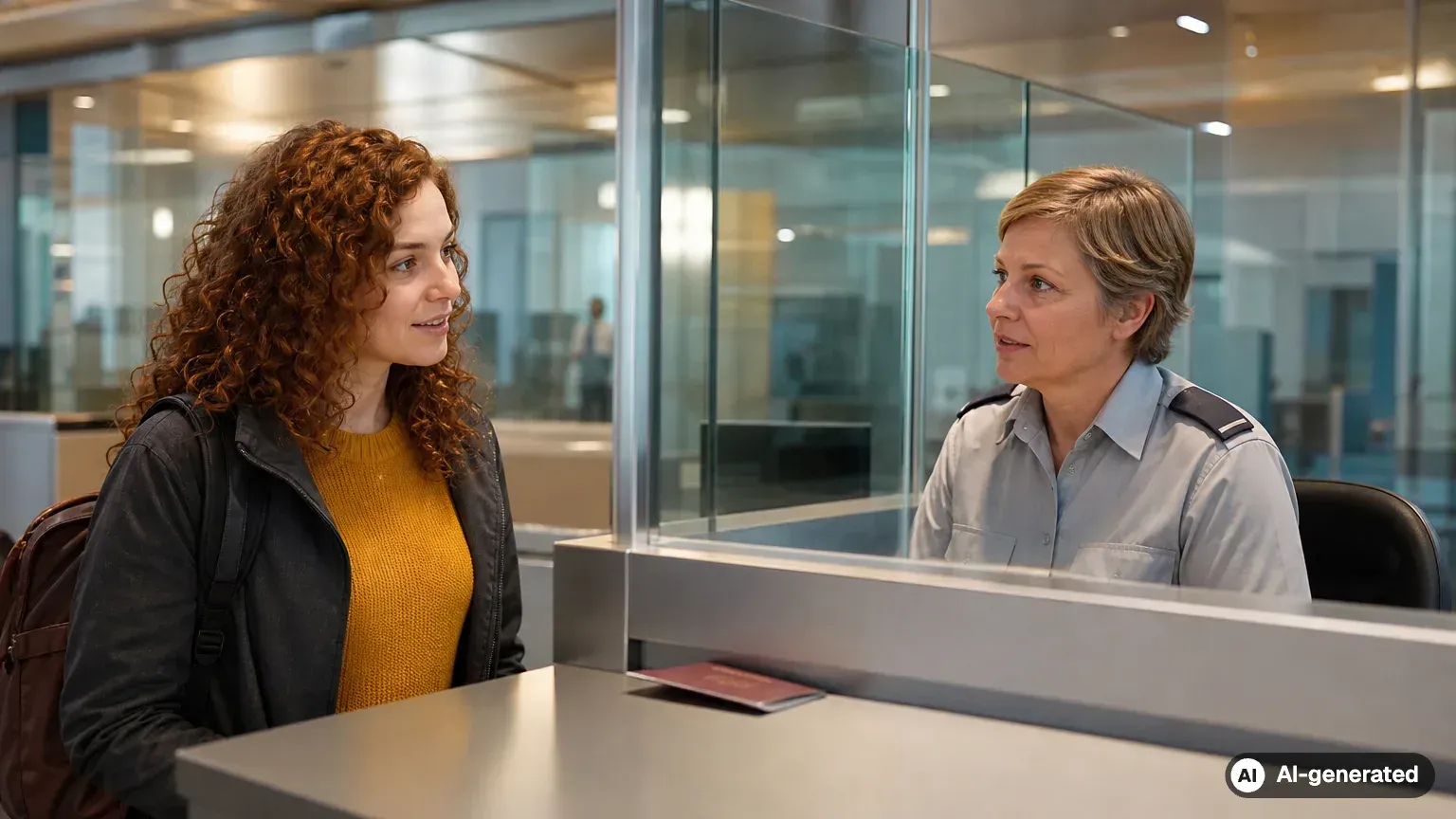
After a long flight, being questioned at the immigration counter can feel unsettling. Border control questions mainly help officers confirm your identity, the purpose of your trip, and whether you meet the entry requirements.
The rules depend on your nationality and passport. Travelers on the same flight, including people who live in the same country or are traveling together, may face different requirements.
Key takeaways
- Answer border control questions briefly, truthfully, and consistently with your travel documents.
- Keep your passport, accommodation address, and return or onward ticket within easy reach.
- There are normally no routine border checks within the Schengen Area, but temporary checks remain possible.
- The EES has been fully operational at the external borders of participating European countries since April 10, 2026.
- A travel authorization or valid visa does not guarantee entry.
What information do border officers check?
The border officer compares your answers with your passport, travel authorization, and supporting documents. The main points are the purpose, length, and funding of your stay, as well as your planned departure.
Common questions at immigration cover:
- the reason and purpose of your trip
- the planned length of your stay
- your hotel, vacation rental, or private accommodation
- your return or onward journey
- how you will pay for the trip
- the cities or countries you plan to visit
- the people traveling with you or whom you are visiting
- business, professional, or other planned activities
The number and detail of the questions depend on your destination, nationality, and documents. A brief interview does not mean there is a problem with your entry.
Purpose of travel and planned activities
A common question is why you are entering the country. A specific answer such as “I am spending 10 days on vacation in London” is more helpful than a vague statement such as “I want to look around.”
For a business trip, you should know the company you are visiting and the reason for the visit. Conferences, client meetings, and contract negotiations may be treated differently from local employment. Your planned activities must therefore match your visa or the permitted purpose of a visa-free stay.
Accommodation and itinerary
You may be asked for the name of your hotel, the address of a vacation rental, or details about the person you are staying with. If you are taking a multi-stop trip, you should at least be able to name your first accommodation and outline your planned route.
Proof of accommodation may be a hotel confirmation, rental document, or invitation. Whether a hotel booking is sufficient depends on the destination’s requirements and the purpose of your trip. A refundable reservation is not automatically unsuitable, but it must reflect your actual plans.
Length of stay and departure
The border officer may ask when and how you plan to leave the country. Give the number of days or your specific departure date. If your trip includes several destinations, your answer should match the full itinerary.
An onward ticket is not universally required. Many countries also accept other evidence of onward travel. The ticket can help show that you intend to leave before your permitted stay ends.
Paying for your stay
Questions about funding are intended to establish whether you can pay for accommodation, food, and your return journey. Depending on the destination, proof of funds may include cash, a credit card, or recent bank information.
The required amount is not the same everywhere. It may depend on the length of the trip, prepaid accommodation, and whether someone has invited you. Only mention funds that you can actually access.
What immigration questions are asked in English?
Immigration questions at many international airports are asked in English. Short, direct answers are enough as long as they reflect your actual travel plans.
These are common questions you may hear at the airport:
| Question | What the officer is asking | Possible short answer |
|---|---|---|
| What is the purpose of your visit? | Why are you traveling? | Tourism. I am visiting London. |
| How long are you staying? | What is the length of your stay? | I am staying for 7 days. |
| Where are you staying? | What is your accommodation? | At a hotel in Manchester. |
| Do you have a return ticket? | Have you booked your journey home? | Yes, my return flight is on November 18. |
| Are you traveling alone? | Is anyone traveling with you? | No, I am traveling with my family. |
| Who is paying for your trip? | How is the trip being funded? | I am paying for the trip myself. |
| What do you do for work? | What is your occupation? | I work as an engineer. |
If you do not understand a question, calmly ask the officer to repeat it or speak more slowly. Do not guess what the question means. If communication remains difficult, you can ask for language assistance.
How does airport immigration work?
Whether you pass through regular passport control depends on your departure point and destination. There are normally no routine border checks within the Schengen Area, while travel documents are checked at its external borders.
Flights within the Schengen Area
The Schengen Area is a European travel zone without routine checks at shared internal borders. On a flight from France to Spain, for instance, there is normally no immigration check. Airlines or security personnel may still verify your identity.
Schengen countries can temporarily reintroduce internal border checks. Carry a valid passport or accepted national identity card even when flying between Schengen countries.
Entering through an external Schengen border
If you fly from the United States, Turkey, or the United Kingdom into the Schengen Area, border control takes place at the first Schengen airport. If you connect in Paris before continuing to Spain, for example, you complete immigration in Paris.
EU, EEA, and Swiss citizens are checked differently from other travelers, with the focus generally on identity, document validity, and security checks. The European Economic Area, or EEA, consists of the EU countries plus Iceland, Liechtenstein, and Norway.
Third-country nationals in the Schengen Area
Third-country nationals are people who are not citizens of an EU or EEA country or Switzerland. Additional entry conditions apply to them. Checks may cover a visa or residence permit, accommodation, funding, travel purpose, and permitted length of stay.
The 90/180-day rule applies to many short stays. It allows no more than 90 days in any 180-day period. As a general rule, the passport must have been issued within the previous 10 years and remain valid for at least 3 months after the planned departure.
What applies outside the Schengen Area?
Outside the Schengen Area, each destination sets its own requirements for documents and supporting evidence. Travelers may therefore face more detailed questions depending on their nationality and travel plans.
A national identity card is not universally accepted as an international travel document. Many countries require a passport with 3 or 6 months of remaining validity. The relevant date is often your planned departure rather than your arrival.
Entering the United Kingdom
Depending on your nationality and purpose of travel, you may need a passport, a UK eTA, or a visa for a short tourist visit. The applicable entry conditions should be checked for the date of travel, as of November 7, 2026. An eTA is electronically linked to the passport used for the application.
Eligible travelers can use automated ePassport gates at UK airports if their document and personal circumstances meet the requirements. At an in-person check, questions about your purpose, length of stay, accommodation, and return journey are common. The UK government publishes entry information on GOV.UK.
Travel authorization and the border decision
An eTA, ETA, ESTA, or another electronic travel authorization initially allows you to travel within its stated conditions. At the border, an officer determines whether you meet all entry requirements.
You can be denied entry with a valid visa. Possible reasons include missing evidence, inaccurate information, a travel purpose that does not match your authorization, or another barrier to entry. An authorization does not replace a valid passport or the airport inspection.
Which documents should you keep ready?
Keep your travel document and any required entry authorizations ready first. Save supporting evidence in a format you can open without airport Wi-Fi.
Depending on the destination, you may be asked for:
- a valid passport or accepted national identity card
- a visa, eVisa, eTA, ETA, or ESTA
- a residence permit, if applicable
- a return or onward ticket
- a hotel booking, rental document, or invitation
- the address and phone number of your accommodation
- proof of sufficient funds
- travel or international health insurance
- documents supporting a business, study, or event-related visit
- health or vaccination records, if required
- a consent letter for a minor traveling alone
Save essential documents as PDFs or screenshots as well. A dead battery or unavailable data connection should not prevent access. Printed copies may be useful if the destination requires paper evidence or several travelers share the same booking documents.
How should you answer border control questions?
Answer briefly, truthfully, and without unnecessary side details. Your statements should match your documents and actual travel plans.
Present your passport open to the photo page and remove it from its cover if asked. When questioned about accommodation, give the name and location rather than saying only “a hotel.” If you are staying with someone privately, you should be able to explain your relationship to that person.
Inconsistent information is more likely to trigger follow-up questions. If your hotel booking covers 8 nights but you say you are staying for 14 days, you should be able to explain the rest of your itinerary. The same applies if your return flight, visa, and stated purpose of travel do not match.
Remain calm if the same question is asked more than once. Repetition may be used to compare your answers. Feeling uncertain does not by itself mean that entry will be refused.
What happens during secondary inspection?
During secondary inspection, your entry is not completed at the first counter. You are directed to a separate area where officers examine your documents and answers more closely.

Possible reasons include a damaged passport, unclear travel plans, missing evidence, or a required database check. Technical problems at an eGate can also lead to a manual inspection. An additional check does not mean that entry has been refused.
The officers may ask further questions or review additional documents. These may concern the person you are visiting, your finances, your employment, or previous trips. Current contact details for your accommodation can help clarify the situation.
If a required visa or travel authorization is missing, you may be denied boarding or entry. If entry is refused at the airport, the information you receive about the next steps depends on the country. Arguing at the inspection counter does not replace the applicable review or appeal process.
How do EES and ETIAS change border checks?
The Entry/Exit System, known as EES, digitally records many third-country nationals crossing the Schengen Area’s external borders. ETIAS, by contrast, is a planned travel authorization for certain visa-exempt third-country nationals.
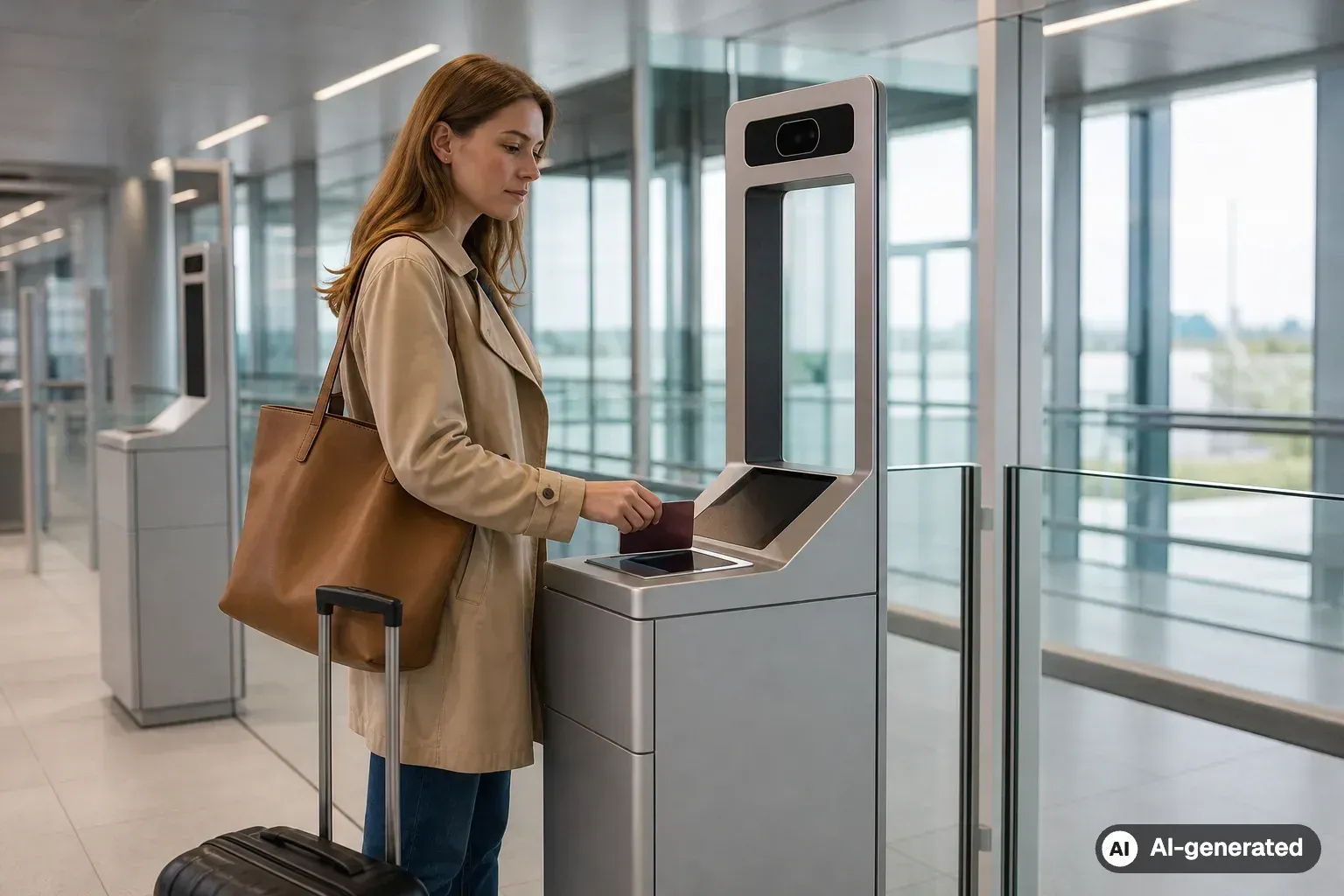
EES records entries and exits digitally
The EES has been fully operational at the external borders of participating European countries since April 10, 2026. It records information including passport details, entry and exit dates, a facial image, and fingerprints. EU, EEA, and Swiss citizens are generally not covered by the system.
Some airports provide self-service systems for collecting this information. The formal border inspection by an officer still follows after the data has been recorded.
ETIAS is planned for visa-exempt travelers
ETIAS is scheduled to launch in the fourth quarter of 2026. As of November 7, 2026, the underlying official announcement had not provided a specific launch date.
ETIAS is intended for certain visa-exempt third-country nationals. The planned official fee is 20 euros, with travelers under 18 and over 70 expected to be exempt. Border officers may still ask about your travel purpose, length of stay, and accommodation even if you hold ETIAS.
Clear answers make border checks easier
Preparing for border control does not mean carrying as many documents as possible. The useful documents are those that clearly support your specific travel plans. If you know your accommodation, length of stay, and departure arrangements, you can answer unexpected follow-up questions calmly.
Before departure, compare your bookings with the entry requirements for your passport and travel purpose. If your route changes, update your saved evidence so that your documents and answers remain consistent.
Frequently asked questions
What happens if the eGate rejects my passport?
You will normally be directed to a manual passport check. The cause may be a technical problem, an unreadable chip, or unsuccessful facial recognition. Rejection by an eGate is not, by itself, a refusal of entry.
Will I go through border control during a layover?
It depends on your route and the airport. If you enter the Schengen Area during a connection, border control takes place at the first Schengen airport. It may not be required if you remain in an international transit area.
Can I enter without a confirmed hotel booking?
The destination may still require a credible accommodation plan. If you are staying privately, the name, address, and invitation of the person you are visiting may be sufficient. You should be able to explain and fund a flexible trip without advance bookings.
Are children also questioned at the border?
Children may be asked age-appropriate questions about the destination or the adults traveling with them. Additional documents may be required when a minor travels alone or with only one parent or legal guardian.
How long does border control take?
There is no reliable standard duration. Passenger volume, the type of travel document, eGate use, and additional checks all affect waiting times. Allow enough time between flights if you have an onward connection.