Deutsch
 English
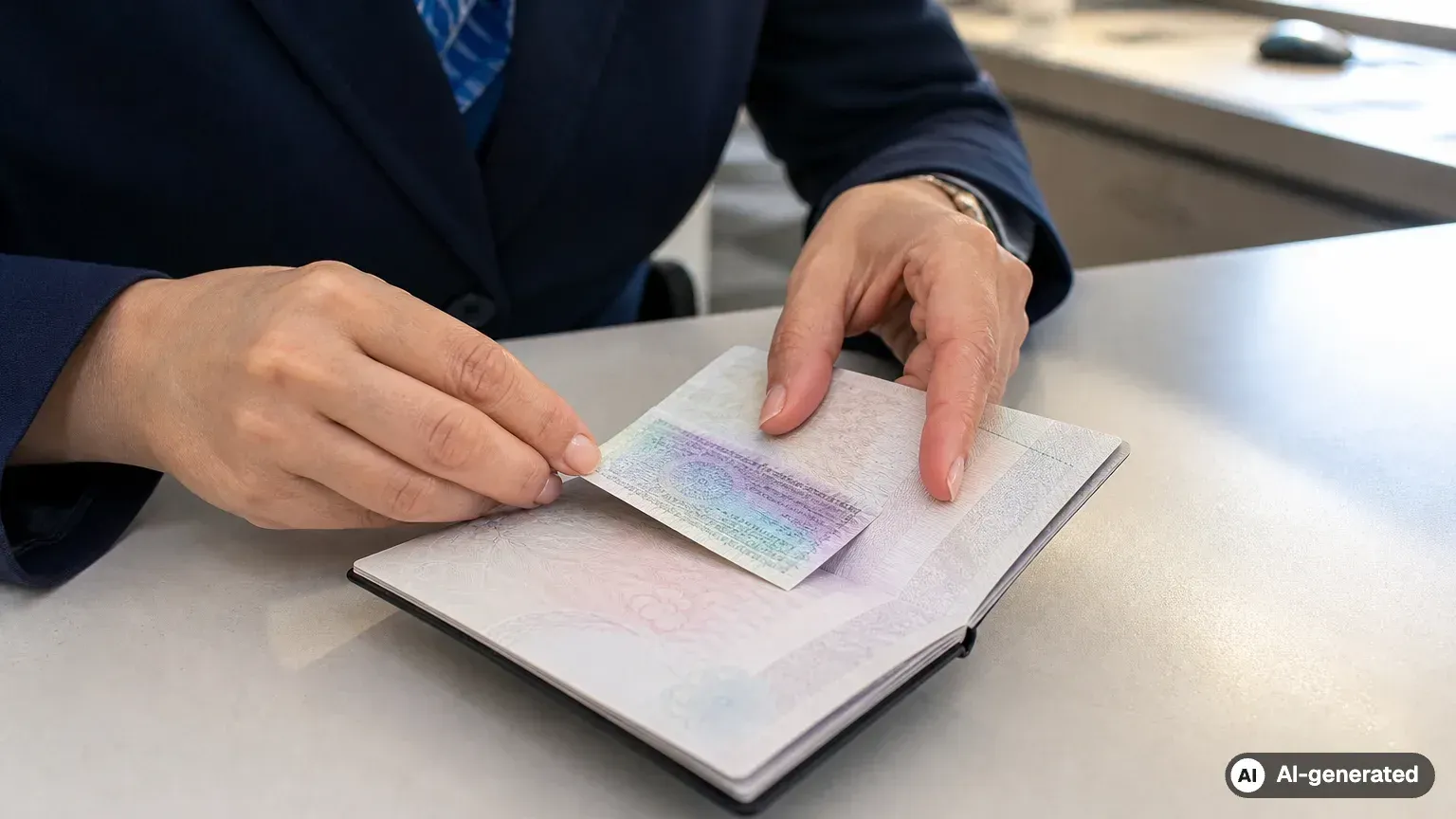
Booking a trip does not automatically give you the right to enter your destination. Depending on the country, you may need a visa, electronic travel authorization, or simply a valid passport. A visa is an official authorization to enter and stay in a country for a specific purpose and period.
Entry requirements depend on your nationality and the passport or travel document you use. Travelers with a temporary, emergency, or other nonstandard passport may be subject to different rules.
Key takeaways
- A visa allows entry and stay for a specified purpose and period.
- Whether you need a visa depends on your nationality, destination, travel purpose, length of stay, and route.
- A Schengen visa permits no more than 90 days of stay within any 180-day period.
- A visa that is valid for one year does not automatically allow you to stay for an entire year.
- Fees vary by country and visa type and may change at any time.
When Do You Need Travel Authorization?
Whether you need travel authorization depends mainly on your nationality, destination, travel purpose, and length of stay. Transit countries, your mode of transportation, and the type of travel document you hold may also affect the requirements.
Many passports allow visa-free entry to certain countries for short tourist stays. However, visa-free does not always mean authorization-free. Some visa-exempt travelers flying to Canada generally need an eTA. Travelers entering the United States under the Visa Waiver Program need an ESTA.
You are more likely to need a visa if you plan to work, study, or remain in the country for an extended period. The same applies if your planned activity is not permitted under visa-free entry. A business meeting may be allowed, while carrying out hands-on work in the country may require a work visa.
Where you live does not by itself determine whether you need a visa. If you hold a passport from one country and a residence permit for another, check the rules that apply to your passport. A residence permit for your country of residence does not automatically replace a visa for a third country.
What Does a Visa Mean for Your Trip?
A visa specifies the purpose and period for which you may travel, but it does not guarantee entry at the border. It comes with conditions covering factors such as your travel purpose, validity period, number of permitted entries, and maximum length of stay.
The authorization may appear as a sticker or stamp in your passport. Many countries now issue visas digitally and link them electronically to the passport number. The information in your application must therefore match the passport you will use exactly.
A visa does not replace your passport. At the border, you may also be asked for a return or onward ticket, proof of accommodation, and evidence that you have sufficient funds. Your reason for traveling must also match the visa conditions.
A visa and a residence permit are not the same. A visa is often used for entry and the initial period of stay. A residence permit, by contrast, covers a longer-term stay for purposes such as study, employment, or family reunification.
What Types of Visas Are Available?
Visa types differ mainly according to travel purpose and length of stay. Each destination sets its own visa names and determines which activities are permitted.
- A tourist visa covers vacations and often private visits.
- A business visa may permit meetings, conferences, negotiations, or trade show visits.
- A student visa is intended for people planning a degree program, language course, or other educational stay.
- A work visa permits employment, often together with a work permit or employment contract.
- A transit visa covers travel through a country or a specific layover.
- A family or visitor visa allows you to visit or join close relatives.
- A medical visa is issued for planned examinations or treatment.
- A national visa is intended for longer stays in a particular country.

Whether you need a tourist or business visa depends on what you will actually do during the trip. If you perform paid work while traveling, simply calling the trip a business visit does not make that activity permissible. The conditions of the specific authorization determine what is allowed.
A transit visa may be required even if you do not plan to leave the airport. Some transit authorizations apply only within the international transit area. Different entry rules may apply if you need to collect your baggage or transfer to another airport.
What Is the Difference Between a Visa, eVisa, eTA, and ESTA?
An eVisa is a visa applied for electronically. An eTA and ESTA, by contrast, are electronic travel authorizations for certain visa-exempt travelers. Each authorization has its own eligibility requirements and does not replace a valid passport.
| Term | Meaning | Typical Format |
|---|---|---|
| Visa | Authorization for a specified travel purpose and stay | Passport sticker, stamp, or digital document |
| eVisa | Visa applied for and issued electronically | Digitally linked to passport details |
| eTA | Electronic travel authorization for certain visa-exempt travelers | Digital authorization obtained before travel |
| ESTA | Electronic US travel authorization under the Visa Waiver Program | Digital authorization obtained before departure |
For an eVisa, eTA, or ESTA, the passport number is especially important. If you receive a new passport after approval, you will often need to apply for a new travel authorization. The same may apply if the passport number entered in the original application was incorrect.
A Visa on Arrival is requested or issued only after you reach your destination. Depending on the country, you may still need to submit information, complete a form, or obtain advance approval before traveling. Allow for possible waiting times at the airport or border crossing.
How Does a Schengen Visa Work?
A Schengen visa allows nationals who require a visa to make a short stay in the Schengen Area. It permits no more than 90 days of stay within any 180-day period and may be limited geographically or by date.

The Schengen Area consists of 29 European countries. Ireland and Cyprus are not Schengen countries, and the United Kingdom is also outside the Schengen Area.
Whether you need a Schengen visa depends on your nationality and the purpose and length of your stay. Travelers whose nationality allows visa-free short stays do not need a Schengen visa for an eligible visit, but the 90-day limit and other entry conditions may still apply.
According to the European Commission, the usual documents include an application form, a valid passport, and travel medical insurance. You may also need to provide evidence of accommodation, financial means, your travel purpose, and your planned return.
If you plan to visit several Schengen countries, you generally apply through the country that is your main destination. If you will spend the most days in one country, that country’s relevant office will normally handle the application. If the stays are equal in length, the country you enter first may determine where you apply.
How Does the 90/180-Day Rule Work?
You may spend no more than 90 days in the Schengen Area within any rolling 180-day period. This 180-day window moves forward each day and includes every day spent in Schengen countries.
A stay from June 1 through June 10 counts as 10 days because both the arrival and departure dates are included. Earlier stays in any other Schengen countries are added together. Time spent in the United Kingdom does not count toward the total.
The rule does not apply only to Schengen visa holders. It also covers many travelers who may enter the Schengen Area visa-free for short stays. A visa with a longer validity period does not automatically remove the 90-day limit.
If you enter and leave frequently, keep a record of every day spent in the Schengen Area. Even a short trip may affect your allowance when other Schengen stays fall within the rolling 180-day period.
How do you apply for a visa?
First, identify the right visa based on your nationality, destination, purpose of travel, and length of stay. Then complete the application, submit the required documents, and wait for a decision.
- Check which entry requirements apply to your passport.
- Match your planned activities to the correct visa category.
- Check your passport’s validity and available blank pages.
- Complete the application form fully and consistently.
- Prepare all required supporting documents in the specified format.
- Attend any required appointments to submit documents, a passport photo, or biometric data.
- Pay the applicable fees using an accepted payment method.
- Once the visa is issued, check all names, passport details, and validity dates.
You can apply directly through an embassy, consulate, immigration office, or authorized visa application center. Digital applications are often completed entirely online. Alternatively, you can use an application service that helps you complete the form and prepare the required documents.
Do not leave your application until just before departure. Processing times depend on the country, visa category, time of year, and individual circumstances. Requests for additional information or missing documents can cause further delays. Applications for an Indian tourist or business eVisa should be submitted at least four days before the planned arrival date.
Which documents are commonly required?
The required documents depend on your destination and visa category. They commonly provide evidence of your identity, purpose of travel, financial means, and planned stay.
- valid passport
- completed application form
- recent passport photo
- flight, travel, or route itinerary
- return or onward ticket
- hotel reservation, invitation, or other proof of accommodation
- bank statements or proof of income
- travel medical insurance
- proof of employment or enrollment
- invitation letter or details of the person inviting you
- employment contract or admission letter
- birth or marriage certificates for family-related applications
- biometric data such as fingerprints
Pay particular attention to passport validity. Some countries require your passport to remain valid for several months after your planned departure. Others require a specific number of blank pages or stipulate that the passport must have been issued within a certain period.
Children traveling with you have separate document requirements. They need their own recognized travel document and, where required, their own visa. If a child travels with only one legal guardian or without either parent, additional consent forms may be required.
How long is a visa valid?
The validity period tells you when the visa may be used. It is not automatically the same as the permitted length of stay. You must also check the number of entries allowed.
For example, a visa may be valid from March 1 through February 28 of the following year while allowing stays of only 30 days at a time. The expiration date therefore does not show how long you may remain in the country without leaving.
A single-entry visa permits only one entry. After you leave, the visa is usually considered used, even if its printed validity period has not ended. A multiple-entry visa permits several entries, provided you stay within its validity period and maximum permitted length of stay.
Also check whether there is a latest permitted entry date. Some visas require the first or only entry to take place before a particular date. Others also specify a fixed departure date.
How much do visas and travel authorizations cost?
Costs depend on the destination, your nationality, the visa category, and the length of stay. Official fees may change and are often nonrefundable if an application is denied.
As of November 1, 2026, the standard Schengen visa fee is 90 euros for adults and 45 euros for children ages 6 to 12. As another example, a national visa for Germany generally costs 75 euros. Exceptions and reduced fees may apply.
Canada’s eTA costs 7 Canadian dollars. The United Kingdom charges 135 British pounds for a Standard Visitor visa allowing a stay of up to six months. The fee for an Indian eVisa depends on your nationality and visa category, with an additional bank fee of 3 percent.
If you apply directly, you pay the applicable official fee. If you use an application service, a separately disclosed service fee is added for its assistance. Before paying, check which services and official fees are included in the total price.
What happens if your application is denied or you overstay?
A denial means that the specific application was not approved. Staying beyond the permitted period may result in fines, problems when leaving the country, or restrictions on future entry.
The denial notice may explain the reasons and outline options for challenging the decision. Depending on the procedure, you may be able to submit a new application, provide an additional statement, or file a formal appeal. A new application should clearly address the problems identified in the earlier decision.
If you stay longer than permitted, do not ignore the situation. If illness, a canceled flight, or another event outside your control caused the overstay, evidence such as medical certificates or cancellation confirmations may be relevant. The available options depend on the immigration laws of the country concerned.
The right authorization depends on your travel plans
The key question is not only whether your passport allows visa-free travel. Your specific activities, length of stay, and route matter as well. If you combine a vacation with business meetings or travel through another country, assess each part separately.
Confirm your purpose of travel and intended dates before booking flights with restrictive change policies. This helps you choose the right authorization and realistically assess which documents and how much preparation time your application may require.
Frequently asked questions
Do dual citizens need a visa?
The applicable requirements depend on both nationalities and the destination country’s passport rules. If you have dual citizenship, check whether the destination requires you to use a particular passport when entering or leaving. Use consistent passport details for bookings, applications, and border checks.
Does my visa remain valid after I replace my passport?
That depends on the authorization and destination country. Authorizations electronically linked to a passport number often need to be obtained again after a passport change. If the visa is in your old passport, you may be allowed to travel with both passports, or you may need to have the visa transferred.
Can I extend a visa after entering the country?
An extension is possible only if the country’s laws and the specific visa category allow it. Some authorizations cannot be extended. If an extension is permitted, apply before your authorized stay expires.
Does a parent’s visa also cover accompanying children?
No. Children generally need their own travel documents and, where required, their own authorization. A parent’s visa does not automatically cover a child. Consent from a legal guardian who is not traveling may also be required.
Can I travel with a damaged passport?
An airline or border official may reject a damaged passport even if the visa still appears valid. Replace the document before traveling, then check whether you need a new authorization or must have the existing one transferred.