Deutsch
 English

Travelers visiting several European countries can often cross national borders without routine passport checks. The Schengen Area makes this possible. It currently connects 29 countries, but it is not the same as the European Union or the eurozone.
The rules that apply to you depend on your nationality, route and travel document. Visa requirements, permitted stays and document rules can vary considerably between travelers.
Key takeaways
- The Schengen Area currently includes 29 European countries.
- The travel document you need depends on your nationality and whether your destination accepts a national ID card.
- Many visa-exempt travelers are limited to 90 days within any 180-day period.
- Bulgaria and Romania have been full members of the Schengen Area since January 1, 2025.
- The EES has been fully operational since April 10, 2026, and ETIAS is scheduled to launch in the fourth quarter of 2026.
Why does Schengen make travel easier?
Participating countries have generally removed routine checks on people at their shared internal borders. Travelers can therefore cross many borders by road or rail without passing through systematic immigration control.
The shared area covers more than 4 million square kilometers and is home to over 450 million people. According to the Council of the European Union, participating countries also apply common rules to external borders, short stays and Schengen visas.
Schengen does not remove every national rule. Each country retains its own regulations covering customs, road travel, security, health and goods that must be declared. Police and security checks also remain possible.
Which countries are in the Schengen Area?
The Schengen Area currently consists of 29 countries: 25 EU member states and four countries outside the European Union.

These EU countries are in the Schengen Area
The following EU member states participate fully in the Schengen Area:
- Austria
- Belgium
- Bulgaria
- Croatia
- Czechia
- Denmark
- Estonia
- Finland
- France
- Germany
- Greece
- Hungary
- Italy
- Latvia
- Lithuania
- Luxembourg
- Malta
- Netherlands
- Poland
- Portugal
- Romania
- Slovakia
- Slovenia
- Spain
- Sweden
Bulgaria and Romania have participated fully since January 1, 2025. Their land borders with other Schengen countries are now treated as internal borders.
These Schengen countries are not in the EU
Four countries participate in the Schengen system without being members of the European Union:
- Iceland
- Liechtenstein
- Norway
- Switzerland
A journey from France to Switzerland remains within the Schengen Area. Customs rules may still apply to goods and purchases because Switzerland is not part of the EU customs union.
Ireland and Cyprus are special cases
Ireland is an EU member but does not belong to the Schengen Area. Travelers therefore pass through regular border controls, and Irish entry requirements apply independently of Schengen rules.
Cyprus is also an EU member, but it has not yet fully removed controls at its borders with the Schengen Area. A flight from Athens to Larnaca therefore crosses a Schengen external border.
What is the difference between Schengen, the EU and the eurozone?
These three terms describe different forms of European cooperation. Their memberships overlap, but they are not identical.
The main differences are:
| Term | Purpose | Example of an exception |
|---|---|---|
| Schengen Area | Area without routine checks on people at shared internal borders | Switzerland participates but is not an EU member. |
| European Union | Political and economic union with 27 member states | Ireland belongs to the EU but not to Schengen. |
| Eurozone | Countries that use the euro as their shared currency | Poland belongs to Schengen and the EU but does not use the euro. |
The EU customs union is separate as well. The absence of routine immigration checks does not determine whether goods must be declared or import duties paid.
Which travel document do you need?
Your required travel document depends on your nationality and destination. Citizens of some countries can travel within much of Europe using a valid national ID card, while other travelers need a passport. A driver’s license is not a travel document.
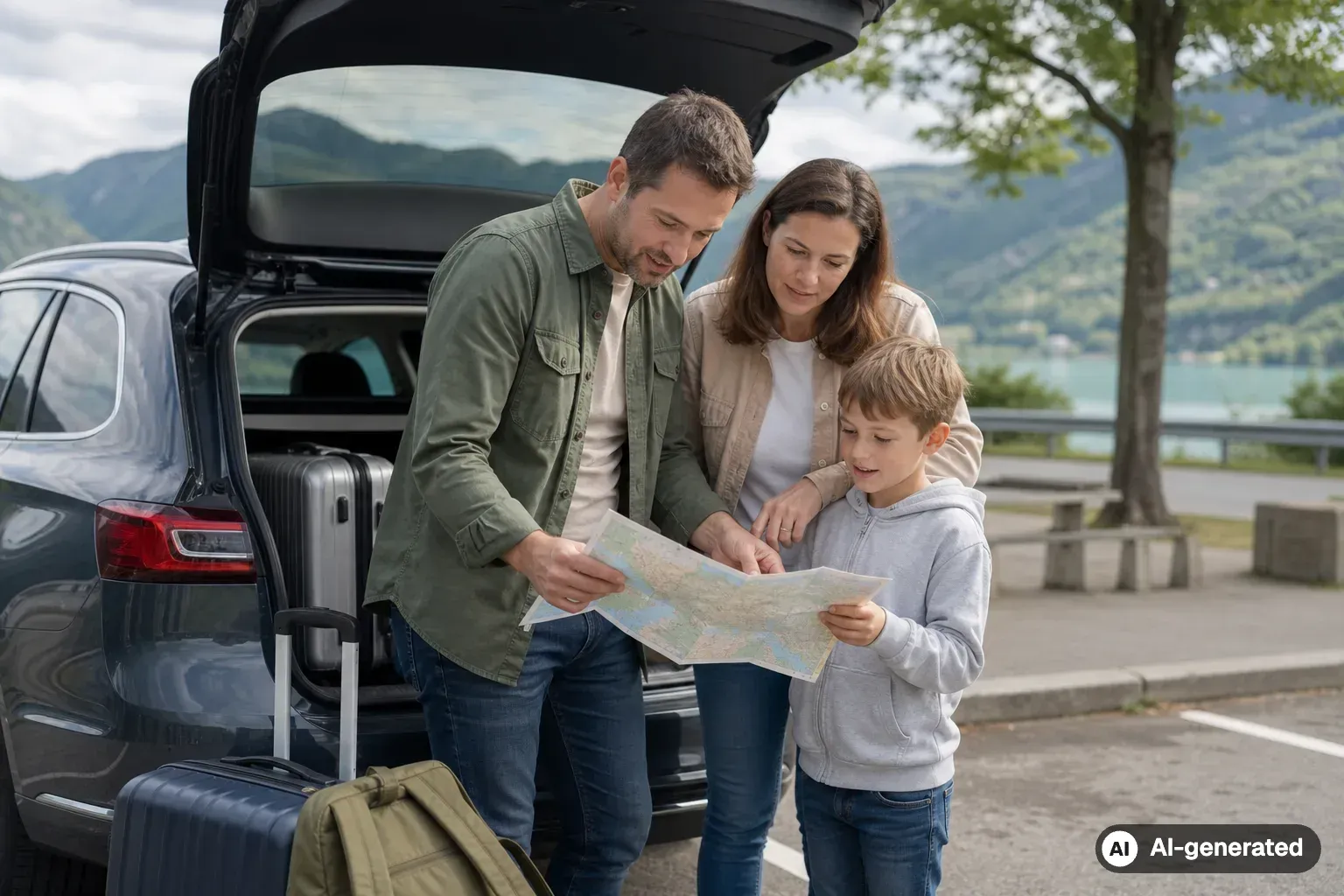
Carry the required document throughout your trip. Checks may take place at borders, on public transportation or during police inspections. Airlines and other transportation companies may also verify your identity.
Many destinations require a passport to remain valid for another three or six months. Within the Schengen Area, passport validity and ID card rules depend on your nationality, immigration status and destination.
Children need their own documents
Each child traveling with you needs an individual, valid travel document. An entry in a parent’s passport is not sufficient. Depending on the family circumstances and destination, a consent letter from a parent or legal guardian who is not traveling may also be advisable or required.
Acceptance rules for children’s passports, temporary documents and documents close to expiry vary by country. Check that every child’s document meets the requirements for the full route, including transit stops.
Why can border checks still happen?
Schengen generally removes routine checks at internal borders, but it does not rule out temporary controls. A country may introduce them for a limited period if it identifies a serious threat to public order or internal security.
When traveling by car, bus or train, allow for spot checks and possible delays. Missing travel documents can cause problems even on a route that has gone a long time without visible controls.
Airport security screening operates independently of Schengen. It checks passengers and baggage before departure rather than determining whether someone has immigration permission to enter. Police checks near borders also remain permitted.
Customs checks serve another purpose. They may cover cash, tobacco, alcohol, protected wildlife or goods brought from outside the EU customs union. Goods may therefore be inspected at the Swiss border even when the journey remains within Schengen.
What are internal and external Schengen borders?
An internal border lies between two Schengen countries. An external border separates the Schengen Area from a non-Schengen country and is also crossed on an international flight between these areas.
Traveling across an internal border
The borders between France and Belgium, France and Spain, and Austria and Italy are internal Schengen borders. Routine immigration checks generally do not take place there.
The same principle applies to flights between two Schengen countries. Airports still conduct security and identity checks, but travelers do not normally pass through immigration solely because of that border crossing.
Traveling across an external border
Travelers going from Spain to Morocco or from Greece to Turkey leave the Schengen Area. At the external border, officials check travel documents, permission to enter and, where required, a visa.
A direct flight from France to the USA also crosses a Schengen external border. On the return journey, immigration checks usually take place at the first airport within the Schengen Area. A connecting flight within the area is then treated as a Schengen flight.
How should you plan a multi-country trip through Europe?
For a multi-country trip, the final destination is not the only place that matters. Check every country on your route, including transit countries and planned stops outside the Schengen Area.
A journey through France, Spain and Portugal remains entirely within the Schengen Area. The same applies to a route from Austria to Italy. Routine checks on people at their shared borders are generally absent.
A route through Ireland, Cyprus or the United Kingdom works differently because additional entry rules apply. On an itinerary with a connecting flight, whether you leave the international transit area can also determine if you need a transit visa.
List the countries in the order you will visit them. This makes external borders, transit stops and different document requirements easier to identify before departure.
Who does the 90-day rule apply to?
Many visa-exempt travelers who are not citizens of the EU, EEA or Switzerland may remain in the entire Schengen Area for no more than 90 days within any 180-day period. The days are not calculated separately for each country.
If you spend 30 days in France, 30 days in Italy and 30 days in Austria, you have used 90 days in total. Moving to another Schengen country does not restart the calculation.
The 180-day period is a rolling window. For every day of your stay, you must look back over the previous 180 days and count the qualifying days spent in Schengen. Briefly leaving the area does not automatically create a new 90-day allowance.
This short-stay rule does not apply to EU, EEA or Swiss citizens exercising freedom of movement rights. National registration, work, study or residence rules may still apply to longer stays.
When is a Schengen visa required?
Whether you need a Schengen visa depends primarily on your nationality. The visa is intended for short stays such as vacations, family visits or business trips.
You generally apply through the country that is your main destination. If your trip includes several countries, this is often the one where you plan to spend the most time. If the stays are equal in length, the country of first entry may determine where you apply.
A visa can permit one or several entries. Single Entry permits one entry, while Multiple Entry allows several entries during the visa’s validity. The permitted length of stay is a separate limit and must also be followed.
Application process and possible fees
A Schengen visa application can be submitted through the destination country’s embassy, consulate or designated application center. The government visa fee covers application processing and may change. Required documents and processing times vary by case, so prepare your application well before your planned trip.
What do EES and ETIAS change?
The EES digitizes border records for certain travelers who are not citizens of participating European countries. ETIAS is planned as an electronic travel authorization for eligible visa-exempt travelers.
EES records entries and exits digitally
The Entry/Exit System, known as EES, has been fully operational at the relevant Schengen external border crossings since April 10, 2026. It records the entries and exits of certain travelers visiting for short stays.
The system stores information from the travel document along with the date and location of the border crossing. It also records biometric data such as a facial image and fingerprints, allowing permitted stays to be tracked digitally.
Citizens of EU countries are not registered in EES when traveling under their freedom of movement rights. Citizens of Iceland, Liechtenstein, Norway and Switzerland are also exempt.
ETIAS has not launched yet
ETIAS is a planned electronic travel authorization for eligible visa-exempt travelers. It is not a visa. According to information published by the European Commission, its launch is scheduled for the fourth quarter of 2026, but an exact date has not yet been announced.
EU, EEA and Swiss citizens will not need ETIAS when exercising freedom of movement rights. It is intended for nationals of certain visa-exempt countries entering participating European destinations for a short stay.
Which documents should you take?
Even if your entire trip remains within the Schengen Area, your documents should match your route and personal circumstances. Digital copies can help if something is lost, but they do not replace the original during a check.
Depending on your trip, you may need:
- a valid passport or accepted national ID card
- an individual travel document for every accompanying child
- vehicle registration documents and a driver’s license for a road trip
- proof of health insurance and any additional travel coverage
- a parental consent letter for a minor traveling alone or with one parent
- documentation for medication if required by the destination
Tip: Keep a copy of your travel document separately from the original. Record the document number and contact details for reporting it lost or stolen.
A route through a non-Schengen country may require additional documents, such as a passport, electronic travel authorization or visa. Transit-country rules also apply.
Your route determines how much preparation you need
Schengen makes cross-border travel more convenient, but it does not replace checking your specific itinerary. If you visit only Schengen countries, focus on valid travel documents, possible spot checks and national rules.
If your journey crosses an external border, your nationality, transit arrangements, length of stay and required entry authorizations become relevant. These factors determine whether your current document is sufficient or further preparation is needed.
Frequently asked questions
Are all EU countries in the Schengen Area?
No. Ireland belongs to the European Union but not to the Schengen Area. Cyprus has not yet fully removed controls at its borders with the Schengen Area.
Do you need a passport within the Schengen Area?
That depends on your nationality and destination. Some travelers can use a valid national ID card, while others need a passport. A driver’s license is not accepted as a travel document.
Are there still border checks within the Schengen Area?
Routine checks on people at internal borders are generally absent. Countries may temporarily reintroduce them in response to a serious threat to public order or internal security. Police, security and customs checks also remain possible.
Who is exempt from the 90-day rule?
The limit of 90 days within any 180-day period applies to many visa-exempt travelers from outside the EU, EEA and Switzerland. It does not apply to EU, EEA or Swiss citizens exercising freedom of movement rights.
Who will need ETIAS?
ETIAS is intended for nationals of certain visa-exempt countries traveling to participating European destinations for a short stay. EU, EEA and Swiss citizens will not need it when exercising freedom of movement rights.