Deutsch
 English
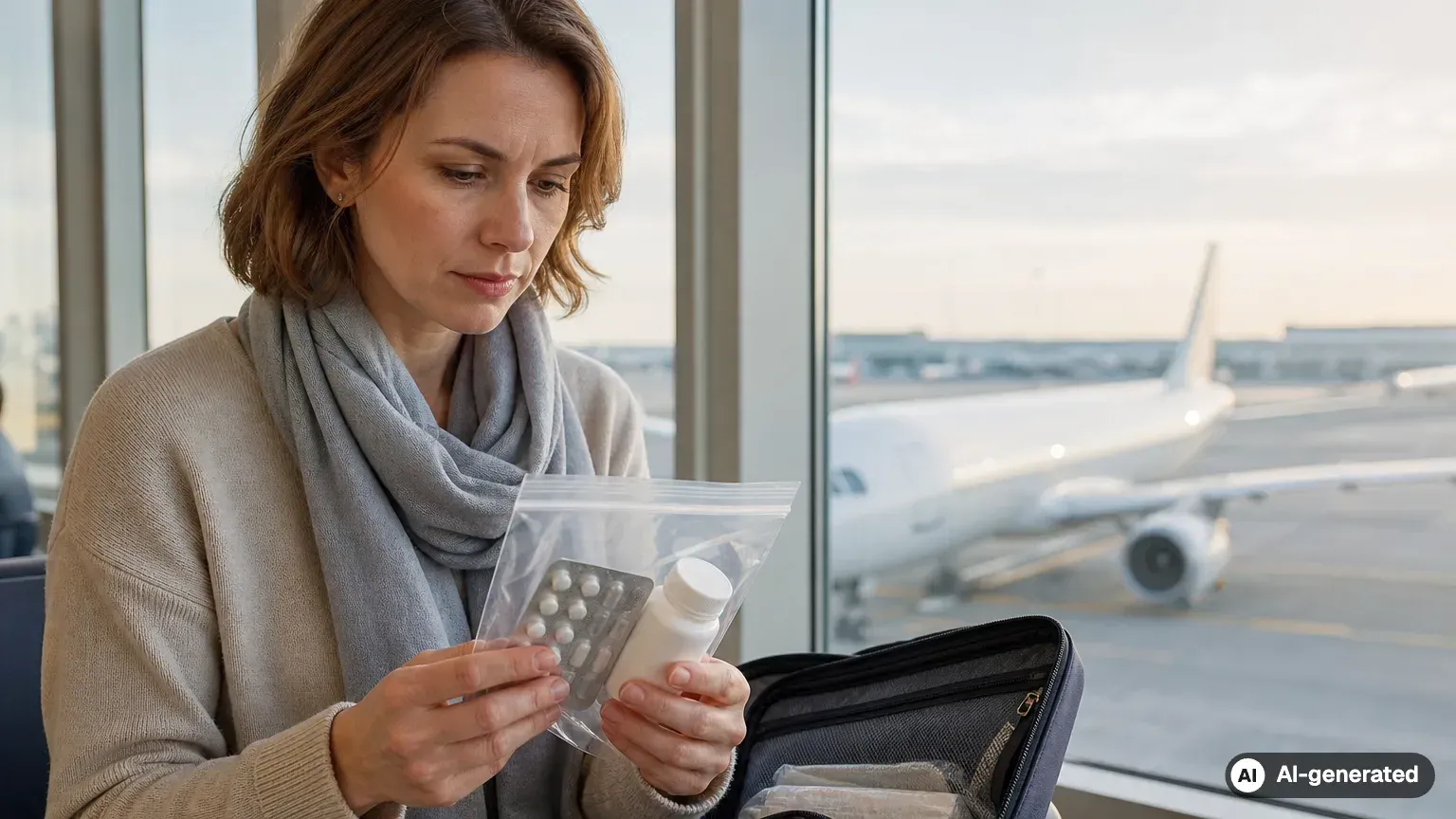
If you need to take medication abroad, packing the required tablets may not be enough. Your destination may classify an active ingredient more strictly than your home country or require advance approval.
Requirements depend on your nationality, destination, route, length of stay, and travel documents. This information does not replace medical or legal advice.
Key takeaways
- Controlled substances may require medical letters, certified documents, or import permits.
- The Schengen certificate for controlled narcotic drugs covers travel lasting no more than 30 days.
- Medication you need regularly should remain in its original packaging in your carry-on baggage.
- Rules for bringing medication home vary by country, active ingredient, and quantity.
Three sets of rules govern traveling with medication
Several sets of requirements overlap when you travel with medication. You need to consider the export and return rules in your home country, transportation requirements, and the import laws of your destination and any transit countries.
A medicine that is approved and prescribed in your home country is not automatically permitted everywhere else. Countries classify active ingredients, concentrations, and dosage forms such as tablets, drops, and injections differently. A prescription alone therefore does not prove that importation is allowed.
Your route also matters. If you pass through border control during a layover or need to collect and recheck your baggage, the transit country’s rules may apply. This is particularly relevant for controlled substances.
Which medications require closer checks abroad?
Check medicines containing narcotic or psychotropic controlled substances particularly carefully. Even over-the-counter products may be prohibited, require approval, or be subject to quantity limits at your destination.
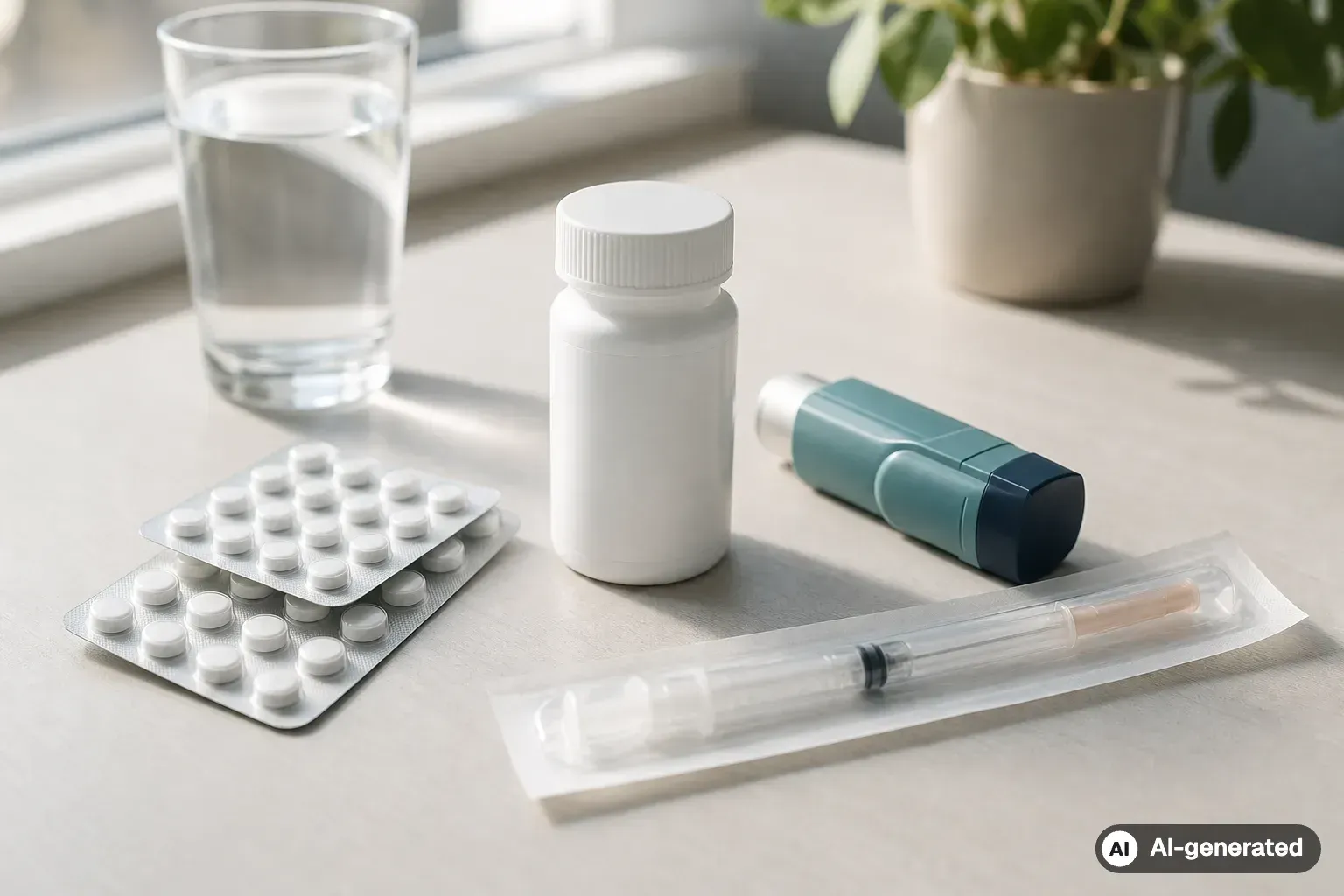
Over-the-counter medicines
A medicine’s over-the-counter status in your home country says nothing about another country’s import rules. Cold remedies containing pseudoephedrine, cough medicines containing codeine, and sleep aids or sedatives may be subject to stricter requirements.
This also applies to cannabis and CBD products. A low concentration or availability without a prescription does not exempt a product from import restrictions. The deciding factors are the active ingredient, its concentration, and its classification under national law.
Prescription medication
If you take medication regularly, the quantity should match the length of your trip and prescribed dosage. A small reserve may be useful in case of flight cancellations or other disruptions, provided your destination’s import limit permits it.
Frequently affected medicines include insulin, psychiatric medication, blood thinners, anti-seizure medication, and drugs used with syringes or injection devices. A medical certificate can help identify them and may be required.
Narcotic and psychotropic substances
Strict requirements often apply to narcotic drugs and psychotropic medicines. Psychotropic substances affect the central nervous system and may be internationally controlled.
Depending on national classifications, these include:
- Morphine, fentanyl, oxycodone, and other opioids
- Buprenorphine and methadone
- Methylphenidate and certain amphetamine-based medicines
- Diazepam and other benzodiazepines
- Certain sleep aids and sedatives
There is no single worldwide rule for traveling with these medicines. The International Narcotics Control Board documents national requirements for controlled medicines, including forms, permits, and maximum quantities.
Which documents should you carry?
For prescription medication, carry the original packaging, a copy of the prescription, and a current medical certificate. Controlled substances may require special forms or government approval.
What should the medical certificate include?
The certificate should clearly connect the medicine to the traveler. An English version is often useful when traveling internationally. Some countries also require a translation into their official language.
A detailed certificate should include:
- The patient’s name and date of birth
- The medicine’s brand name and active ingredient
- Its concentration and dosage form
- The dosage and dosing schedule
- The total quantity carried
- The treatment period and travel dates
- The medical need for the medicine
- The clinician’s name, address, stamp, and signature
A medical letter documents your treatment but does not replace a required import permit. If your destination requires advance approval, carry both documents.
Schengen certificates for narcotic drugs
Travelers carrying prescribed narcotic drugs within the Schengen Area use a certificate issued under Article 75 of the Schengen Implementing Convention. The prescribing clinician completes it, after which the designated body certifies the document.
The standard form limits the certificate’s validity and the prescribed supply to no more than 30 days. A separate certificate is required for each affected narcotic drug.
A Schengen certificate is not a worldwide travel document. For a country outside the Schengen Area, that country’s forms and approval procedures apply.
Documents for travel outside the Schengen Area
Outside the Schengen Area, an English medical letter may be sufficient, but a certified or preapproved document may also be required. Some countries additionally request the original prescription, a physician’s letter, or an import permit.
Do not check only the brand name. Lists and application forms often use international names for active ingredients. Record the active ingredient, concentration, daily dose, and total quantity for every medicine.
Keep digital copies of your documents separately from your baggage. You may still need to present the required originals during an inspection.
How should you pack medication for a flight?
Medication you need regularly belongs in your carry-on baggage. It remains accessible if checked baggage is delayed or lost. Whenever possible, keep it in its labeled original packaging.
Original packaging and patient information
Loose tablets in pill organizers are harder to identify during security or customs inspections. Original packaging shows the brand name, active ingredient, and dosage. The patient information leaflet provides further details about use and storage.
A pill organizer can be practical for doses taken during the flight. Keep the remaining tablets in their original packaging and carry the relevant documents.
Liquids, syringes, and medical devices
Medically necessary liquids may undergo separate screening at airport security. This can include insulin, liquid medicines, and injectable solutions. Keep them separate and readily accessible.
For syringes, needles, insulin pens, or other medical devices, the medical certificate should explicitly confirm the need for them. Additional requirements may apply at the departure airport, on the airline, or at a transit airport.
Temperature-sensitive medication
Insulin and certain biologics, which are medicines produced using biotechnology, require a defined storage temperature. Follow the package instructions and medical or pharmaceutical advice. Direct contact with frozen cooling packs can damage sensitive medicines.
For longer flights, confirm how long your cooling solution will maintain the required temperature. You also need suitable storage at your destination. A minibar is not automatically appropriate because its temperature may fluctuate.
What customs rules apply to medication?
Customs authorities assess medication according to the destination, active ingredient, and quantity carried. Ordinary medicines for personal use are treated differently from controlled substances or unusually large quantities.
Leaving your home country
Ordinary medicines carried for personal use are generally subject to fewer export restrictions. Narcotic drugs and certain other preparations may still require documents, a declaration, or approval.
Permission to export a medicine does not mean your destination permits its import. Check the requirements separately for every destination and, where relevant, each transit country.
Returning to your home country
Return rules vary by country and by medicine. For re-entry into Germany from outside the EU, customs generally treats up to a three-month supply of each medicine, calculated from the recommended dosage, as personal use.
Such personal-use allowances do not automatically cover narcotic drugs or prohibited products. Unusually large quantities may also appear to be commercial imports. Keep your prescription, dosage information, and purchase receipts.
Shipping medication by mail or courier
Carrying medication in your baggage is not the same as shipping it. Medicines sent internationally are subject to separate pharmaceutical and customs rules in the country receiving the package.
Products sold at your destination as vitamins or dietary supplements may be classified as medicines by the country receiving the shipment. Do not rely on a later shipment as a substitute for arranging an adequate supply before departure.
How do requirements differ by destination?
Requirements range from a medical certificate to an advance import permit. Saudi Arabia, the United Arab Emirates, Japan, and Singapore illustrate how differently countries treat controlled substances.
The following comparison summarizes specific points from documented national requirements:
| Destination | Specific requirement | Possible documents |
|---|---|---|
| Saudi Arabia | Controlled medication is limited to a supply of no more than 30 days. | Prescription, certified medical letter, and additional certificates |
| United Arab Emirates | An online permit is available for certain controlled substances. | Import permit and medical documentation |
| Japan | Active ingredients may be classified differently than in your home country. | Ingredient-specific review and, where required, approval |
| Singapore | Controlled medication may require advance approval. | Medical documents and approval |
These examples cannot be applied to other destinations. Check every active ingredient separately, even when countries appear to have similar rules. Requirements can change and may differ for importation, possession, and use.
How should you plan for time-zone changes and refills?
On long-distance trips, time-zone changes can affect your dosing schedule. Any adjustment depends on the active ingredient, direction of travel, interval between doses, and your health. Do not change your dosing schedule without medical guidance.

Medicines requiring particular care include insulin, anti-seizure medication, blood thinners, corticosteroids, Parkinson’s medication, and drugs with a narrow therapeutic range. A narrow therapeutic range means that even small dose changes can significantly affect the medicine’s benefits or side effects.
For longer stays, determine before departure whether and how you can obtain refills. A prescription from your home country may not be accepted abroad. Brand names, dosages, and available dosage forms may also differ.
A physician’s letter listing the international name of the active ingredient can support medical care at your destination. Arrange refills particularly early if your medicine requires refrigeration or is legally controlled.
Which mistakes commonly cause problems?
Many problems arise because travelers consider only the prescription issued at home. At the border, the destination country’s classification of the active ingredient and its documentation requirements also matter.
Avoid these mistakes:
- Moving tablets into unmarked containers without original labels
- Recording only the local brand name instead of the active ingredient
- Treating a prescription as an import permit
- Using a Schengen certificate outside the Schengen Area
- Failing to check transit-country requirements
- Packing controlled medication without confirming quantity limits
- Putting all essential medication in checked baggage
- Planning a shipment by mail without checking the rules first
Start preparing early if documents need certification or permits must be requested. Procedures vary by country and issuing body, so do not rely on receiving documents at short notice.
An active-ingredient check provides the basis for planning
Whether you can take medication abroad does not depend on package size alone. The active ingredient, trip length, route, and national classification together determine the permitted quantity and required documents.
If you need controlled medication, plan your trip around these details and discuss your dosing needs with a medical professional. This also helps you assess whether a route through several transit countries is practical or whether an alternative involves fewer formal requirements.
Frequently asked questions
Can someone traveling with me carry my medication?
Controlled medication should remain with the person for whom it was prescribed. Keep the medicine, prescription, and certificate together in your own carry-on baggage whenever possible. If you need assistance, the medical certificate should clearly identify the patient.
What rules apply to medication for children?
Children need their own documentation when the destination requires it. The certificate should include the child’s name, date of birth, active ingredient, and age-appropriate dosage. An accompanying adult’s documents cannot automatically cover a child’s controlled medication.
Do I need several permits for a cruise?
The rules of every country on a cruise itinerary may apply, even if you only plan a day trip ashore. Also check the embarkation port and any countries you transit on the way there.
What should I do if my medication is lost abroad?
Contact a local medical practice or health care facility and provide the active ingredient, dosage information, and physician’s letter. Controlled medicines may be subject to special national procedures for a new prescription or dispensing.
Can I travel with medical cannabis?
A prescription does not automatically permit you to import medical cannabis. Your destination may prohibit cannabis entirely or require special approval. Check the rules in countries where you change planes as well.
Do I need to declare medication at airport security?
Present liquid medicines, syringes, and larger medical equipment during screening. Whether advance notification is required depends on the airport and airline.