Deutsch
 English

If your passport is lost abroad, you will often need an official replacement travel document to return home. A passport copy or driver’s license is not enough at the border. Report the loss promptly, and change your travel plans only after confirming which document is valid for your route.
This guidance is for travelers of any nationality. The authority to contact, document names, validity periods, and fees depend on your nationality and the country that issued your passport.
Key takeaways
- Report the lost or stolen passport to the local police and request written confirmation.
- The permitted journey and validity period of an emergency travel document depend on the issuing country and document type.
- Fees vary by nationality, document, application location, and local currency.
- The country you are leaving, every transit country, and your airline must accept the replacement document for your planned route.
- Do not use a recovered passport that was reported lost or stolen until the issuing authority confirms that it remains valid.
Document the loss and gather your travel details
First, check whether you have simply misplaced your passport. Contact your last accommodation, the airport, train operator, or rental car office. If the search is unsuccessful or the passport was stolen, go to the local police.
After losing your passport, complete these steps in order:
- Report the loss or theft to the local police and request written confirmation.
- Keep a copy of the police report and its reference number. If the passport was stolen, make sure the report clearly records the theft.
- Contact the nearest embassy or consulate representing your nationality. For example, a German citizen can contact the German embassy to confirm whether an emergency document covers the return trip to Germany and what happens to visas in the old passport.
- Gather evidence of your identity, nationality, and planned journey.
- Ask the airline whether it accepts the proposed document on every flight segment.
- Check the transit rules and ask whether the country you are leaving requires an additional exit permit or visa.
An embassy or consulate may require a police report before issuing a replacement passport or emergency travel document. The local immigration authority may also request it if you need an exit visa.
Tip: Photograph the police report, reference number, and replacement travel documents. Store the files securely somewhere you can access without your phone in case it is lost too.
Which replacement document can you use after losing a passport abroad?
The right replacement document depends on whether you are returning directly to your country of nationality or residence or continuing your trip. Transit countries, existing visas, and the time remaining on your stay also matter.
Emergency document for your return journey
An emergency travel document is usually intended for the necessary journey back to your country of nationality or residence. It may cover essential transit segments, but its validity and permitted route depend on the issuer. It does not replace a regular passport for unrestricted onward travel.
A direct flight or a route with as few connections as possible is often easier to arrange than an itinerary with several stops. Before booking, confirm that every transit country and the airline accept the document.
Temporary passport
If your country issues temporary passports, one may be suitable when you need to remain abroad longer or travel to another country. The embassy or consulate will consider your identity, planned route, and the next country’s entry requirements.
The mission may need to contact the authority that issued your lost passport. This is particularly likely if you have no passport copy or other identity document.
Regular biometric passport
A regular biometric passport may be more suitable for a longer stay abroad. Production and delivery can take considerably longer, so it is often not the right solution for an imminent flight home.
Visas attached to a lost passport do not automatically transfer to the replacement document. Whether they remain usable, must be replaced, or require a new application depends on the issuing country and the type of visa.
Help from another country’s embassy or consulate
Depending on your nationality and applicable international arrangements, another country’s embassy or consulate may be able to assist if your own country has no accessible mission nearby.
The assisting mission will confirm your eligibility with your home country and explain where the document can be used. The permitted destination and route depend on the specific arrangement and document issued.
What documents will the embassy or consulate need?
The embassy or consulate must verify your identity and nationality. A passport copy can speed up this process, but it is not a travel document. The evidence required depends on what you have available and your planned journey.
Prepare as many of these documents and details as possible:
- police report for the loss or theft, including the reference number
- copy or digital scan of the lost passport
- national identity card, if it was not also lost
- driver’s license as supporting identification
- passport photo that meets the stated requirements
- flight, train, or ferry tickets
- accommodation details, itinerary, and planned border crossing
- birth certificate or other civil status records, if requested
- additional documents from parents or legal guardians for minors
If several forms of evidence are missing, the mission may verify your information with authorities in the country that issued your passport. Contact details for the issuing authority and information about where the lost passport was issued can help.
How much does a replacement passport cost abroad?
Fees depend on your nationality, the replacement document, and the country where you apply. Additional charges may apply. Fees can change and may be collected in local currency, so the amount you pay can also depend on the exchange rate.
A regular biometric passport usually has a different fee from an emergency or temporary document. The amount may also vary by age and application location, and some issuing countries charge an additional fee for applications made abroad.
Other charges may apply for expedited production, passports with additional pages, applications outside a mission’s usual jurisdiction, or assistance outside regular office hours. New passport photos, transportation to the mission, extra accommodation, and rebooking costs can also add to the total.
How long does it take to receive a replacement document?
There is no fixed processing time. An emergency travel document may be available sooner than a regular passport. Identity checks, missing documents, and limited opening hours can extend the process.
On weekends or public holidays in your passport’s issuing country, the authorities needed to verify your identity may be unavailable. If the embassy or consulate must contact them, issuance may be delayed until the next business day. Change your flight only after speaking with both the mission and the airline.
A regular biometric passport may take considerably longer because of production and international delivery. A temporary passport is not necessarily available immediately either. Timing depends on identity checks, local facilities, and your planned route.
Can you continue traveling if your passport is lost abroad?
You can continue your trip only if the airline, transit countries, and destination accept your replacement document. You must also meet all visa, travel authorization, and passport validity requirements. Receiving a replacement document does not by itself mean that your planned route is permitted.
Check with the airline and transit countries
Airlines often check travel documents at check-in. If a transit country does not accept your replacement document, the airline may refuse boarding despite your confirmed booking. Check the requirements for every airport and country on your itinerary.
Remaining in the international transit area does not automatically avoid problems. Changing planes or terminals, or traveling on separately booked tickets, may lead to additional document checks. A direct flight to your home country reduces the number of countries involved.
Visas and entry stamps
A visa sticker may have been inside the lost passport. An electronically issued visa may also be linked to the old passport number. Before departure, confirm whether the visa must be transferred, verified, or replaced.
A digital arrival card may also contain your passport number and entry details. After receiving a replacement passport, this information may no longer match. The immigration office or an application partner can explain whether an update is required.
Exit visas after losing a passport
An exit visa confirms that you are permitted to leave the country where you have been staying. You may need one if your entry stamp or visa was lost with your passport.
A police report, a copy of your old passport, and booking confirmations can help officials reconstruct your entry record. Allow time for this additional process before confirming a new departure.
What applies when traveling within Europe?
Citizens of European Union countries can generally travel within the European Union and to Iceland, Liechtenstein, Norway, and Switzerland with a valid passport or national ID card. However, there is no region-wide guarantee that you can continue traveling without a valid document after reporting it lost.
If you still have a valid national ID card, it may be sufficient on eligible routes. This does not apply to every European country or automatically cover transit through countries outside the region. The airline may also require specific documentation.
A driver’s license proves that you are authorized to drive, but it does not replace a passport or national ID card. A passport copy can help establish your identity, but it does not independently allow you to cross a border.
Thailand shows the possible consequences
In Thailand, German nationals, for example, need a passport; a temporary passport is generally accepted, but a national ID card is not, and the travel document must be valid for at least six months on entry.

A passport reported lost or stolen is routinely no longer accepted for entry. If you recover it after reporting the loss, do not use it to reenter the country.
Contact your country’s embassy or consulate in Bangkok or another mission that can assist citizens of your nationality. You should also ask whether Thai authorities require exit clearance if your entry stamp was lost with the passport.
Which embassy or consulate should you contact?
Your nationality determines which country can provide consular assistance, while your location determines which mission is responsible for your area. Travelers can use mission directories to locate the appropriate office, such as an Austrian embassy, and should contact a mission representing their own country of citizenship.
Countries issue different types of emergency travel documents, with varying names, fees, validity periods, and eligibility requirements. You must also check whether transit countries and your destination accept the specific document issued to you.
Citizens of an EU country who are outside the European Union may ask another EU country’s mission for consular protection if their own country has no accessible mission. This EU right does not automatically apply to travelers with other nationalities.
What happens if you find your passport again?
After you report a passport lost, it may be entered in international databases and blocked for travel. If you recover it, notify the passport authority or consular mission that recorded the loss as soon as possible.
Do not resume using the document on your own, even if it appears undamaged. Present it to the authority that issued it or to your country’s consular mission and confirm its status. Otherwise, automated border controls or airlines may still detect the loss report.
This is especially important if you have already received a replacement document. Keep the two documents separate until you receive clear instructions about surrendering or using them.
How should you prepare before traveling?
A securely stored copy will not shorten every process, but it can make identity checks easier. Keep copies of important identity documents separate from the originals or store them in a secure electronic location.
Save the following information before departure:
- The data page of your passport and a copy of your national ID card, if you have one
- Passport number, place of issue, and expiration date
- Visas, travel authorizations, and arrival cards
- Contact details for your country’s nearest embassy or consulate
- Your travel insurance policy number and emergency contact details
- Flight, accommodation, and booking confirmations
Do not store sensitive documents only on the device you carry during your trip. Encrypted storage or access through a trusted person can help. Keep paper copies in a different place from the originals.
Your return route determines the right document
After losing your passport, the key issue is not only how quickly you can obtain a replacement. The document must also suit your route, existing visas, and the departure requirements of the country you are in.
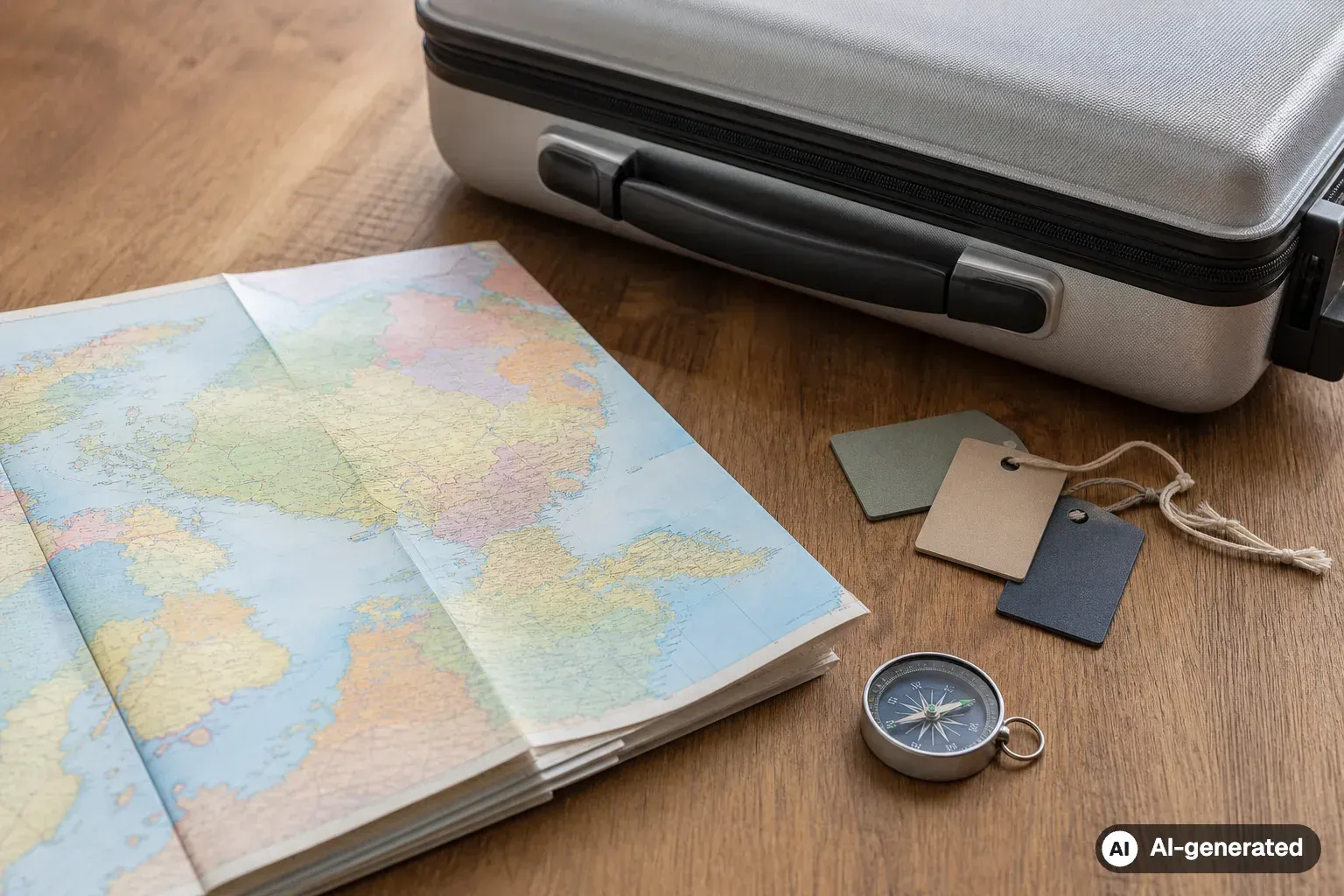
Someone returning directly to their home country may need a different solution from someone continuing to other destinations. Base any rebooking and transit plans on the document you actually receive, not on your original itinerary.
Frequently asked questions
What if only my national ID card is lost?
If you still have a valid passport, you can usually continue traveling. On routes where national ID cards are accepted, the requirements depend on every country and carrier involved. Report the lost card and have its status clarified.
Does a child need a separate replacement document?
Yes. Every child needs their own recognized travel document. The embassy or consulate may also request a birth certificate, proof of custody, or consent from another parent or legal guardian.
Will travel insurance cover the additional costs?
That depends on your policy and the reason for the loss. Keep the police report, receipts, rebooking confirmations, and correspondence. Report the claim within the period stated in your insurance policy.
What happens to a residence permit in the lost passport?
If a residence permit or visa was attached to the passport, contact both your country’s consular mission and the relevant immigration office. The immigration office can explain how to document your residence status and lawful entry.
Can my family send me my national ID card?
This can help only if the card is valid and every country on your route accepts it as a travel document. Shipping risks, customs checks, and delivery times make this an uncertain option if your departure is approaching.
What applies on a cruise?
A cruise often involves several countries, even if you do not plan to go ashore. The cruise line, port countries, and any return-flight route must accept the replacement document. A document intended only for a direct return home is therefore often unsuitable for continuing a cruise.